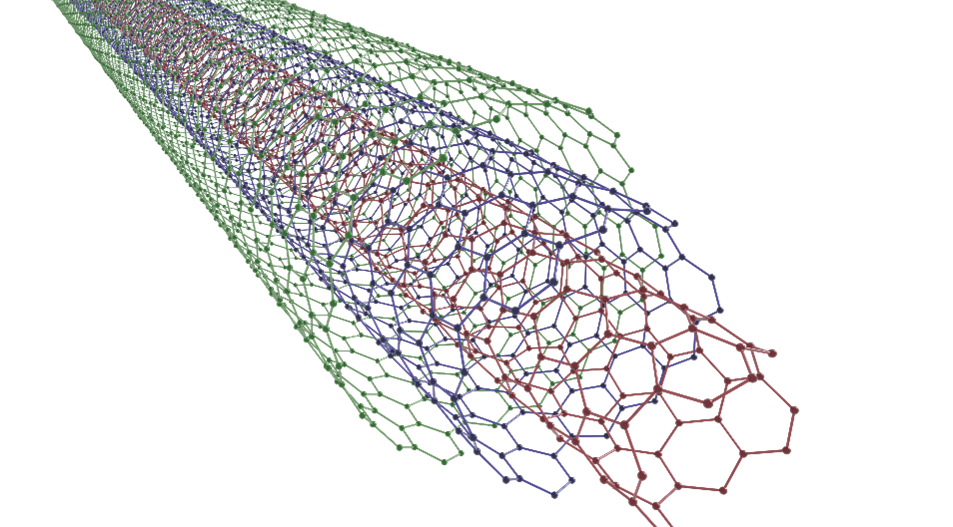
Two essential materials powering next-generation technologies:
Graphene & Carbon Nanotubes
Recognizing the exceptional properties of advanced carbon materials, we supply graphite, graphene, and carbon nanotubes produced by Taiwan Carbon Materials Corp. (Expressed as “TCMC” hereafter) These functional materials are increasingly vital across a wide range of cutting-edge applications.
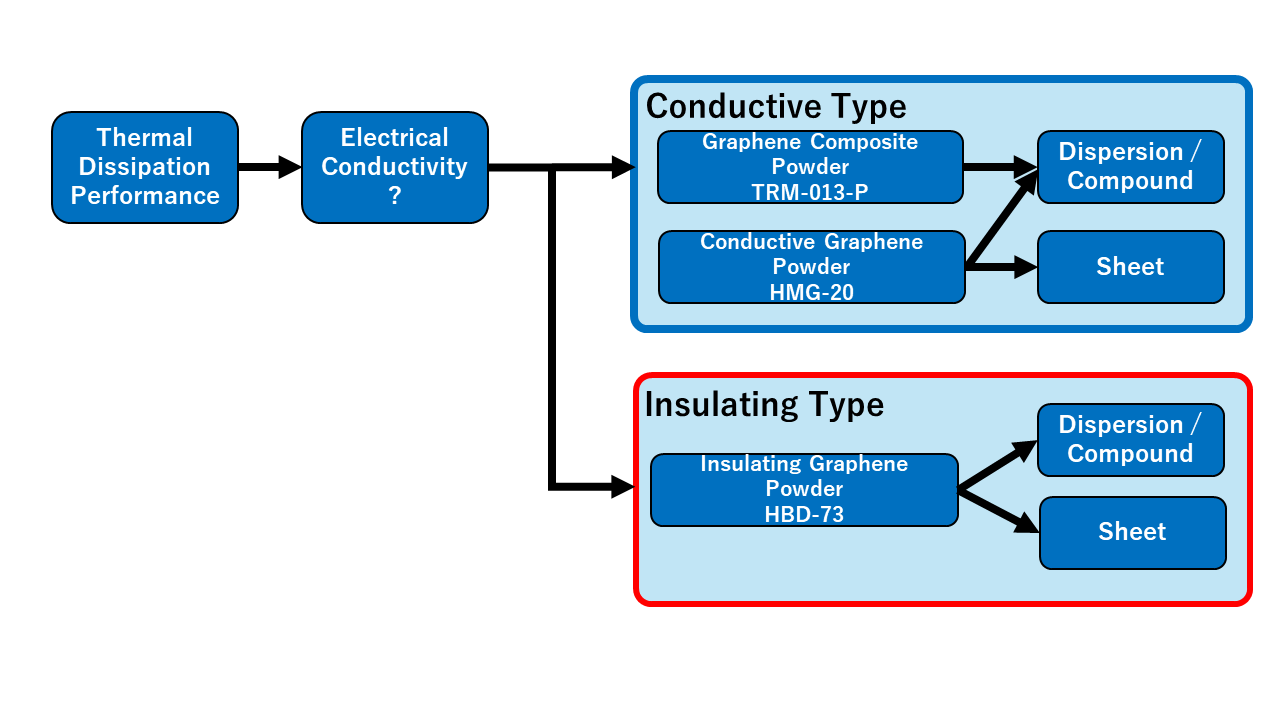
Among them, graphene is particularly noteworthy for its outstanding thermal dissipation capabilities. As the performance demands of data centers continue to rise, the need for efficient heat management in semiconductors, coils, and other components has never been greater.
While graphene is generally known as a conductive material, TCMC has developed an insulating graphene through its proprietary technology—an innovation that opens new possibilities for various industries.
The company offers a comprehensive lineup centered on graphene, including not only powders but also dispersions and sheets, as shown below.
Sample materials are available upon request.
General Characteristics of Carbon Materials Compared with Metals
1. Lightweight
Carbon materials have significantly lower density than metals, making them advantageous in applications requiring weight reduction, such as aerospace and automotive engineering.
2. High Strength
Certain carbon materials possess extremely high strength, exceeding that of many metals, with excellent tensile and compressive properties.
3. Corrosion Resistance
Their superior resistance to chemical corrosion makes carbon materials suitable for harsh environments.
4. Electrical Conductivity
Carbon materials exhibit excellent electrical conductivity, though performance varies among different types.
5. Thermal Stability
They maintain strength and rigidity even at high temperatures without deformation or melting, offering clear advantages in high-temperature applications.
6. Thermal Conductivity
Graphene, in particular, demonstrates exceptional thermal conductivity—surpassing that of copper and aluminum foils.
7. Mechanical Properties (e.g., Young’s Modulus)
Carbon materials—such as carbon fiber–reinforced composites—typically have a high Young’s modulus, meaning minimal deformation under stress.
8. Biocompatibility
Their outstanding biocompatibility enables use in medical devices and biomedical applications.
9. Processability
Carbon materials can be processed in various ways—drawing, weaving, laminating—offering high design and manufacturing flexibility.